Writing Wedding Vows: Choosing Structure, Length and the Balance of Personal and Traditional
A wedding vow is a public promise with a time limit. How to structure it, balance personal story with ceremonial weight, and deliver it so it lands.
Writing Wedding Vows: Choosing Structure, Length and the Balance of Personal and Traditional
You are standing at the altar, holding a piece of paper that shakes because your hands are shaking. The celebrant has just handed you the microphone. You have ninety seconds to deliver a commitment that will define your marriage, and the first words you wrote are: "From the moment I saw you..." Every couple in the room has heard that line before. The difference between a vow that lands and one that does not is not the depth of your feeling; it is the structure you chose before you wrote a word. Writing wedding vows structure and personal vs traditional is the craft problem you solve before you pick up a pen.
How to Write Personal Wedding Vows: The Vow Structure Arc
Every effective personal vow follows a three-part arc: the anchor, the commitment, and the seal. The anchor is the single concrete detail that makes this vow unmistakably yours: a shared inside joke, a moment of crisis you navigated together, a particular place you met or made a decision. The commitment is the declarative sentence that names what you will do. The seal is the closing line that signals you are done, often a single sentence that echoes the anchor or names your future.
This structure works because it solves the two biggest failure modes of personal vows. The first is the rambling narrative that eats ninety seconds and leaves the congregation lost. The second is the generic declaration that could belong to any couple at any wedding. The anchor fixes the second problem; the commitment fixes the first.
Declarative Versus Narrative Vow
A declarative vow states a commitment directly: "I commit to building a home with you wherever we are." A narrative vow tells a story and then extracts the commitment from it: "When we moved into that basement apartment with the broken boiler, I learned that home is not a place. I commit to building a home with you wherever we are." The narrative version takes longer and requires a stronger delivery to hold attention. The declarative version lands faster but risks feeling thin if the pledge is too general. A narrative vow that exceeds two minutes loses half its listeners to mental drift.
Specificity of Commitment
The specificity of a pledge matters more than the story that leads to it. "I will make you coffee every morning" is a better vow than "I will always care for you" because the first is testable and the second is vague. A testable pledge gives the marriage a shared reference point. A vague pledge gives the couple nothing to return to. The most memorable vows share this trait: they name a particular action, a frequency, or a situation.
Traditional vs Personal Vow Structure: Tone Register and Cultural Integration
The choice between traditional and personal is not binary. The most common solution is a shared vow template: a traditional opening line, such as "I, [name], take you, [name], to be my lawfully wedded spouse", followed by a personal pledge section, followed by a traditional closing line. This hybrid solves the problem of tone register: the traditional language provides the ceremonial weight, and the personal section provides the intimacy. The guests hear both the gravity of a public commitment and the uniqueness of the couple.
Tone Register: Formal Versus Intimate
Formal language signals that this is a legal and social commitment, not a private conversation. Intimate language signals that the couple has a particular history. The mistake is choosing one register for the entire vow. A vow that is entirely intimate, inside jokes, pet names, references to private moments, leaves the guests excluded and the rite feeling like a private conversation overheard. A vow that is entirely formal leaves the couple sounding like they are reading a script written by someone else. The hybrid template solves both problems by shifting registers at the natural break between the traditional and personal sections.
Cultural Vow Element Integration
If your tradition includes particular cultural vow elements, the breaking of a glass, the exchange of rings with a particular blessing, a reading from a sacred text, these are not optional decorations. They are the structural moments that the congregation expects and the celebrant has built the rite around. Your personal vow must accommodate them without overwriting them. The practical solution is to write your personal section after the celebrant provides the timeline, then insert it at the designated point. A personal vow that arrives at the ring exchange and says nothing about the ring breaks the cultural rhythm.
Wedding Vow Length and Format: Delivery Time and Cue Card Logistics
The pacing constraint is absolute. The vow portion, including both partners, the celebrant's prompt, and the ring exchange, occupies four to five minutes. Each partner has roughly ninety to one hundred twenty seconds to deliver their vow. Write short. Time it aloud. Anything longer forces the celebrant to cut another element, usually the reading or the musical interlude, which the couple may not want to lose.
Vow Length Delivery Time
Write the vow and time it aloud at your natural speaking pace. Most people speak faster under adrenaline, so the written version should be shorter than the timed version by about ten percent. A vow that reads at two hundred words on the page will run shorter in delivery because of pauses for breath and eye contact. Test it twice: once at your normal pace and once at the pace you expect on the day, which will be faster.
Vow Delivery Cue Card Format
The cue card debate, memorisation versus reading, has a clear answer for most couples: read from a card, but rehearse until you can look up at your partner every third or fourth phrase. Memorised vows that break under adrenaline produce a longer silence than a glance at a card. The cue card format that works: a single 5x8 inch card, landscape orientation, text in 16-point sans-serif font, one phrase per line, with the final line highlighted in a different colour. Do not use a phone. A phone screen reflects light, requires a tap to wake, and breaks the visual connection with your partner. A card goes in a jacket pocket or is held by the celebrant until the moment you need it.
Vow Rehearsal Vocal Pacing
Rehearse standing up, in the shoes you will wear, with the card in your hand. Practise the transition from the celebrant's prompt to your first word. Most couples rush the first sentence because they are anxious to get started. The fix is a deliberate pause of two full seconds after the celebrant finishes speaking, then a slow exhale, then the first word. This pause reads as confidence, not hesitation, and it gives the room time to settle.
Vow Writing Prompts and Examples: Story-Anchored Vows and Pledge Specificity
A story-anchored vow uses a single, particular memory as the entry point. The memory must be short, one sentence, and must name something the guests can visualise: the broken boiler, the cancelled flight, the dog that ran away. The anchor is not the whole vow; it is the first line. The pledge follows. The seal closes. The example: "I anchor this vow in the night we slept on the floor of the Denver airport. You gave me your jacket and said nothing about it. I commit to noticing what you give without being asked, and to returning it in kind. This is my vow to you." That is short, roughly twenty-two seconds of delivery, and it works because the anchor is particular, the pledge is testable, and the seal is clean.
Humour Calibration for the Rite
Humour in a vow calibrates to the room, not to the couple. An inside joke that makes the wedding party laugh but leaves grandparents confused is a failure. The safe zone: a single line of humour that references a universal experience, travel mishaps, cooking disasters, furniture assembly arguments, and lands in the first fifteen seconds. After that, the tone should shift to sincerity. A vow that tries to be funny throughout reads as a performance, not a commitment.
Individual Vow Asymmetry
It is acceptable for one partner to write a longer vow than the other. Individual vow asymmetry is common and does not signal unequal commitment. Tell the celebrant in advance that the vows are different lengths, so the pacing adjusts. The shorter vow is not a weaker vow; it is a different choice. The room does not compare word counts.
The Celebrant Vow Review Process and Ring Exchange Coordination
The celebrant is the person who ensures your vow functions as a public commitment rather than a private love letter. The review process checks three things: legal declaratory words are present or covered elsewhere, the vow does not exceed the time budget, and the vow does not contradict the tone. A celebrant who says 'this is beautiful' without any structural feedback has not done the job. A good celebrant will ask: 'Where is the pledge? Can you make it more particular? Can you cut the second story?' Listen to that feedback.
Ring Exchange Coordination
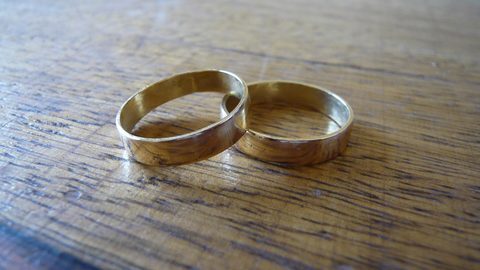
The ring exchange is the moment when the vow's pledge becomes visible. The coordination problem is simple: the vow ends, the celebrant says 'You may now exchange rings,' and the couple fumbles with the rings because they are in the wrong pocket or the best person has not handed them over. The fix: give the rings to the celebrant or the best person at the start. The celebrant holds them until the moment they are needed. The couple does not reach for pockets or purses. The ring exchange takes five seconds and does not interrupt the vow's emotional arc.
Vow Writing Deadline
The single thing that most often goes wrong with wedding vows is not the writing; it is the deadline. Couples write beautiful vows that arrive at the celebrant three days before the wedding, and the celebrant cannot adjust the pacing because the music has already been booked, the readers have already been assigned, and the venue's time limit is fixed. The celebrant then has to cut something else, usually the couple's preferred reading, and the couple resents the loss. Write the vow early. Submit it early. The deadline is the constraint that makes everything else possible.
Common Questions
Do I have to include the legal declaratory words in my personal vow?
Yes. The legal declaratory words, 'I take you to be my lawfully wedded spouse', are required by the celebrant for the marriage to be valid. These words can appear in the celebrant's script rather than in your personal vow, but they must be spoken aloud during the rite. Confirm with your celebrant which section carries the legal weight. If the celebrant says them, your personal vow does not need to repeat them. If the celebrant does not say them, your vow must include them.
What happens if one partner finishes their vow and the other is not ready?
The celebrant has a scripted transition for this moment. Most celebrants will say something like 'And now, [partner two], please share your vows.' The delay is invisible to the guests. The problem occurs when the first partner's vow ends with an unscripted pause that the celebrant does not recognise as the end. The solution is a clear closing line that signals completion: 'This is my vow to you' or 'I make this commitment to you today.' Do not end on a question or a trailing phrase.
Can I use a shared vow template where we both say the same personal lines?
A shared vow template where both partners say identical personal lines is common and works well for couples who want symmetry. The risk is that the lines feel generic because they were written to fit both people. The fix is to write the shared section in the first-person plural, 'we commit', and then add one sentence per partner that is uniquely theirs. This preserves symmetry while avoiding the generic problem.
What is the deadline for submitting vows to the celebrant?
Most celebrants require a vow writing deadline of two to four weeks before the wedding. The celebrant needs time to review the vows for legal completeness, pacing, and coordination with the ring exchange and other elements. Submit a draft at least three weeks out. A vow that arrives the night before creates stress for the celebrant and increases the chance of a last-minute problem with timing or legal wording.
How do I handle emotional regulation during delivery if I cry?
Emotional regulation during delivery is managed by rehearsal, not by willpower. Rehearse the vow aloud at least ten times before the rite. Each rehearsal reduces the novelty of the words and lowers the emotional spike. If you cry during delivery, pause, take a breath, and look at your partner. The guests read a pause for emotion as sincerity, not as failure. Do not apologise for crying. The one thing that breaks the moment is apologising.
Read next
-
 Wedding Planning Decisions: What Drives Each Choice and Cost
Wedding planning decisions explained by what drives each choice and its cost. Route to guides on date, guest list, vows, and venue by what you are trying to decide.
Wedding Planning Decisions: What Drives Each Choice and Cost
Wedding planning decisions explained by what drives each choice and its cost. Route to guides on date, guest list, vows, and venue by what you are trying to decide.
-
 Tinder vs Hinge Comparison: Volume Against Intent and Why Profile Format Decides
Tinder delivers volume; Hinge filters for intent. The same person gets very different results from each, and the reason is the profile format rather than the user base.
Tinder vs Hinge Comparison: Volume Against Intent and Why Profile Format Decides
Tinder delivers volume; Hinge filters for intent. The same person gets very different results from each, and the reason is the profile format rather than the user base.
-
 OkCupid vs Coffee Meets Bagel Comparison: Questions or Scarcity to Solve Swiping
OkCupid uses questions; Coffee Meets Bagel uses scarcity. Both solve the endless-swiping complaint differently—which suits depends on patience and city size.
OkCupid vs Coffee Meets Bagel Comparison: Questions or Scarcity to Solve Swiping
OkCupid uses questions; Coffee Meets Bagel uses scarcity. Both solve the endless-swiping complaint differently—which suits depends on patience and city size.
-
 Best Dating Apps for People in Their 30s and 40s Who Want Dates Not Pen Pals
Which dating apps actually suit daters in their 30s and 40s, based on user-base age skew, profile depth, and mechanics that reward substance over snap judgements.
Best Dating Apps for People in Their 30s and 40s Who Want Dates Not Pen Pals
Which dating apps actually suit daters in their 30s and 40s, based on user-base age skew, profile depth, and mechanics that reward substance over snap judgements.
-
 Best Dating Apps for Serious Relationships: Ranked on Intent, Depth and Effort
The best dating apps for serious relationships ranked on what matters: stated intent, profile depth, and whether the format rewards effort over volume—plus what each costs in attention.
Best Dating Apps for Serious Relationships: Ranked on Intent, Depth and Effort
The best dating apps for serious relationships ranked on what matters: stated intent, profile depth, and whether the format rewards effort over volume—plus what each costs in attention.